

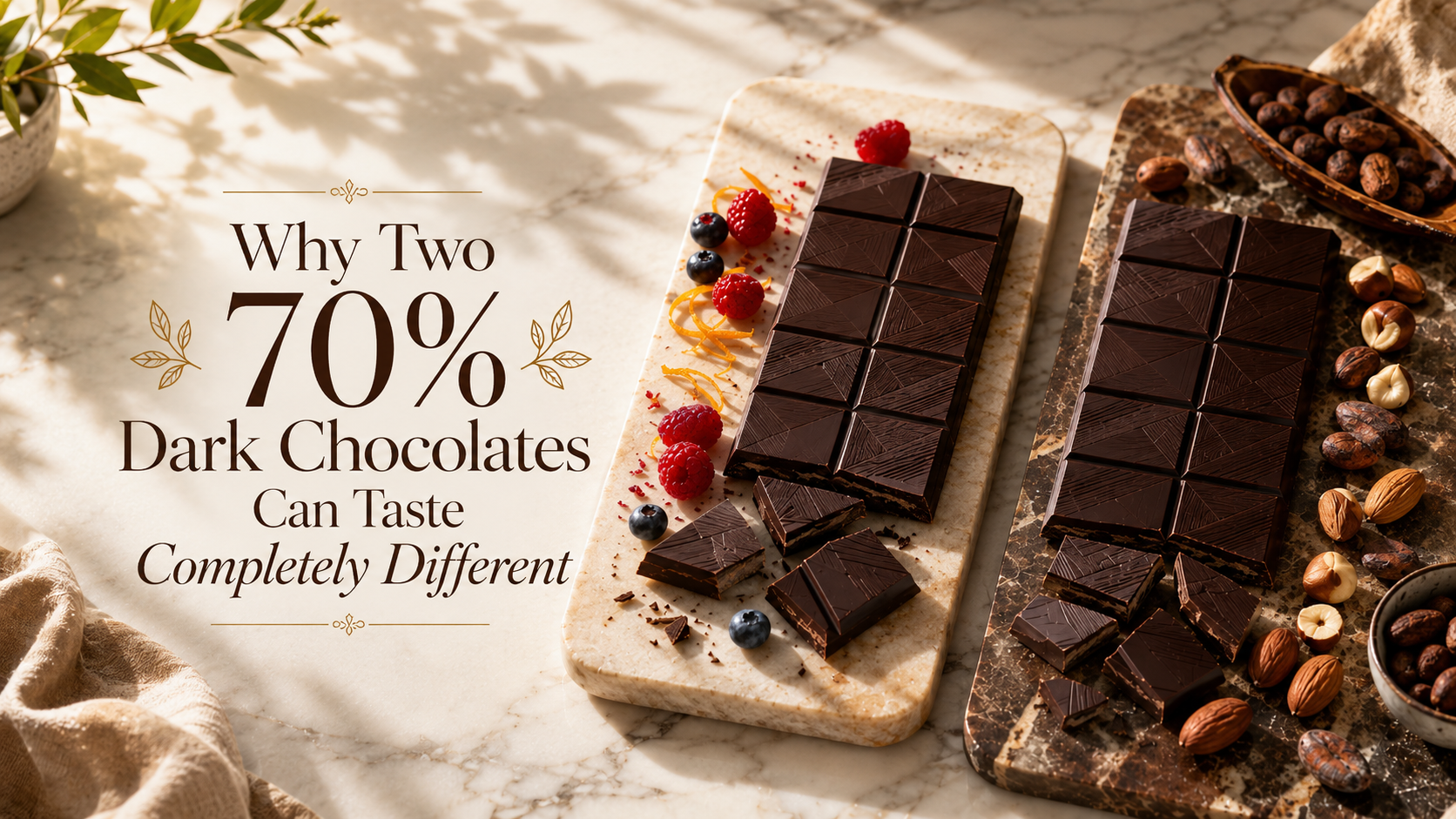
Imagine tasting two different dark chocolate bars, both labelled 70% cocoa.
One has notes of berries and citrus, while the other tastes rich, nutty and deeply roasted.
How can two chocolates with the same cocoa percentage taste so different?
The answer is simple: cocoa percentage is only one part of the story. The flavour of chocolate is influenced by many factors, from the cacao bean itself to the way it is processed and crafted.
Let's explore why every chocolate bar has its own unique personality.
Cocoa Percentage Doesn't Describe Flavour
Many people assume that a 70% chocolate bar should always taste the same.
In reality, the percentage only tells you how much of the chocolate comes from cocoa ingredients and how much comes from the remaining ingredients, such as sugar. (If you're choosing between percentages, see 70% vs 80% dark chocolate.)
It doesn't tell you:
- Which cacao variety was used
- Where the cacao was grown
- How it was fermented
- How it was roasted
- How it was crafted
That's why two 70% chocolates can deliver completely different tasting experiences.
The Origin of the Cacao
Just as grapes produce different wines depending on where they are grown, cacao develops different flavour characteristics based on its origin.
Climate, rainfall, soil and altitude all influence how cacao beans develop. Depending on the origin, chocolate may naturally express notes such as:
- Red berries
- Citrus
- Honey
- Caramel
- Roasted nuts
- Dried fruits
These flavours develop naturally during cultivation and processing. They are not added as flavourings. Learn more in Single Origin Chocolate Explained.
Fermentation Shapes the Flavour
Fermentation is one of the most important steps in chocolate making. After harvesting, cacao beans are fermented to develop the flavour compounds that will later become chocolate.
Well-managed fermentation can produce a balanced and complex flavour profile, while poor fermentation may result in flat or inconsistent flavours. It's one of the reasons premium chocolate makers pay close attention to post-harvest practices.
Roasting Makes a Big Difference
Roasting is similar to roasting coffee beans: it helps unlock aroma and deepen flavour.
- A lighter roast may preserve delicate fruity and floral notes.
- A darker roast may create richer flavours such as cocoa, caramel, toasted nuts or malt.
Every chocolate maker chooses a roasting profile based on the characteristics of the cacao.
Recipe Matters Too
Even with the same cocoa percentage, recipes can vary. Chocolate makers may adjust:
- The amount of cocoa butter
- The type of sugar
- The grinding process
- The conching time
These choices influence texture, sweetness, aroma and how the chocolate melts in your mouth.
Every Chocolate Maker Has a Style
Chocolate making is both a science and an art, and different makers have different goals. Some aim to highlight bright, fruity flavours. Others focus on creating a bold, rich cocoa profile.
Neither approach is right or wrong. It simply reflects the maker's philosophy and craftsmanship.
How to Compare Two 70% Chocolates
A fun way to understand the differences is a simple side-by-side tasting. Pay attention to:
Appearance
Is the surface glossy and smooth?
Aroma
What do you notice before tasting?
Texture
Does it snap cleanly? How does it melt?
Flavour
Can you identify notes such as fruit, nuts, caramel or cocoa?
Finish
How long does the flavour stay after swallowing?
These small observations can reveal just how different two chocolates with the same cocoa percentage can be. For a step-by-step method, read How to Taste Chocolate Like a Pro.
Appreciating Chocolate Beyond the Number
Cocoa percentage is helpful, but it shouldn't be the only factor when choosing chocolate. Understanding origin, craftsmanship and flavour profile helps you find chocolates that truly match your personal preferences.
Just as coffee and wine lovers explore different regions and styles, chocolate lovers can enjoy a world of flavour beyond the percentage on the label.
How VIVE Makes Its 70% Dark Chocolate
At VIVE Chocolate, we believe chocolate should be appreciated as more than just a number.
Our Artisan 70% Dark Chocolate is made bean-to-bar in Malaysia from Malaysian cacao. We roast the beans at a low temperature to keep more of their natural fruity notes, then combine them with just cocoa butter and organic cane sugar. The result is a smooth, balanced bar that shows how much flavour a 70% chocolate can have.
Final Thoughts
The next time you see two chocolate bars labelled 70%, don't expect them to taste identical.
Behind that number lies a combination of origin, fermentation, roasting, recipe and craftsmanship that shapes each chocolate's unique identity.
Sometimes, the biggest differences in chocolate aren't printed on the front of the wrapper. They're waiting to be discovered in the first bite.
Frequently Asked Questions
Does a higher cocoa percentage always mean stronger flavour?
Not necessarily. Flavour depends on many factors, including cacao origin, roasting and recipe, not just cocoa percentage.
Can two chocolates with the same percentage have different sweetness?
Yes. Differences in cocoa butter, processing and flavour profile can change how sweet or intense a chocolate tastes.
Is one 70% chocolate better than another?
Not always. It depends on your personal preference and the style of chocolate you're looking for.
How can I learn to taste the differences?
Try tasting two chocolate bars with the same cocoa percentage side by side, paying attention to aroma, texture, flavour and finish.