

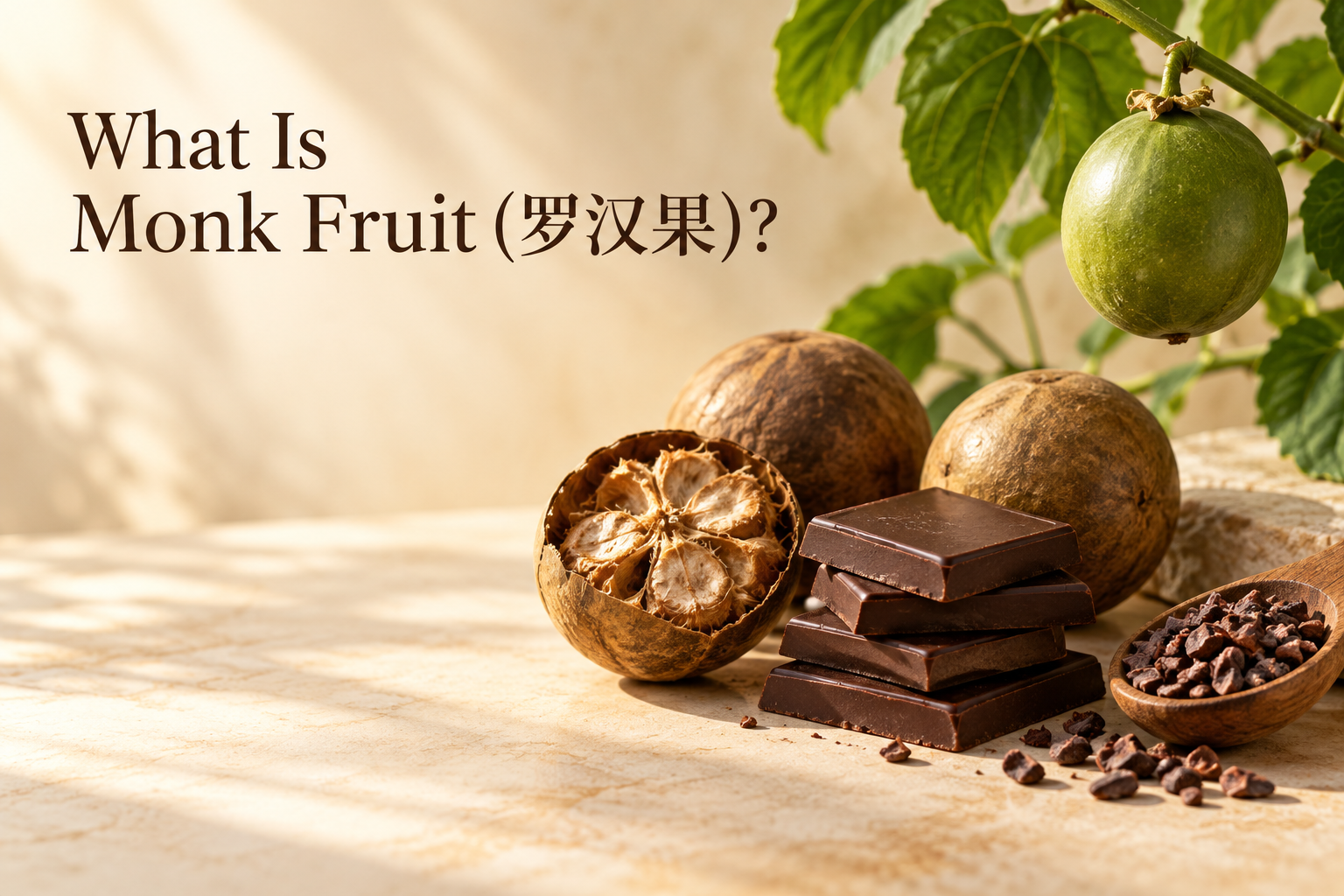
If you have looked at the ingredients of our 80% dark chocolate, you will have seen "monk fruit extract". It is the sweetener we use in place of sugar. This guide explains what monk fruit is, where it comes from, how it tastes and why we chose it for chocolate.
What is monk fruit?
Monk fruit is a small, round fruit that grows on a vine. Its Chinese name is 罗汉果 (luo han guo), and its botanical name is Siraitia grosvenorii. It is native to southern China, especially the mountains around Guangxi, and is related to melons and gourds.
The fresh fruit is green and is rarely eaten as it is. It is usually dried, and the dried fruit has long been used in Chinese kitchens, often simmered in water to make a lightly sweet drink.
How does monk fruit sweeten food?
The sweetness comes from natural compounds in the fruit called mogrosides. To make monk fruit extract, the fruit is crushed and the sweet compounds are separated out. The result is far sweeter than sugar, so only a very small amount is needed. That is also why it adds almost no calories.
What does monk fruit taste like?
Most people find monk fruit clean and light, with a gentle, rounded sweetness. Some notice a faint fruity note, and a few detect a slight aftertaste when the extract is used in large amounts. In dark chocolate, the strong cocoa flavour balances it well, so you taste chocolate first and sweetness second.
Why we use monk fruit in our chocolate
We wanted to make dark chocolate that people can enjoy without added sugar, and still tastes like real chocolate. For us, that meant a sweetener that is gentle on flavour, with no artificial taste. Monk fruit fits, and it works well with real cocoa butter and Malaysian cacao.
These products are sweetened with monk fruit extract and have no added sugar:
- Keto 80% Dark Chocolate
- Single Origin 85% Dark Chocolate Bean Drops
- Mushroom chocolate: SmartFuel, ShroomGuard and ImmunoLux
You can also read how this differs from "sugar-free" in No Added Sugar vs Sugar-Free Chocolate.
Monk fruit compared with other sweeteners
- Sugar. The classic. It has a familiar taste, but it is what "no added sugar" leaves out.
- Stevia. Also plant-based. Some people notice a bitter aftertaste.
- Sugar alcohols (maltitol, erythritol). Often used in sugar-free sweets. Some people find large amounts uncomfortable.
- Monk fruit. Plant-based, with a clean taste. It is often blended with other ingredients in sweetener products, so always read the label.
How to enjoy monk fruit chocolate
- Let a square melt slowly on your tongue to notice the cocoa and the gentle sweetness together.
- Pair it with black coffee or unsweetened tea.
- Chop it into oats, yoghurt or homemade granola.
- Store it below 25°C. In hot weather, keep it in a sealed bag in the fridge.
Frequently asked questions
What is monk fruit called in Chinese?
罗汉果 (luo han guo). In some places it is also called Buddha fruit.
Is monk fruit an artificial sweetener?
No. It comes from a fruit. The extract is made by processing the fruit to separate its sweet compounds, much like many other plant-based ingredients.
Does monk fruit chocolate taste like normal chocolate?
Very close. It is a little lighter and less sugary, so the cacao flavour comes forward.
Is monk fruit chocolate suitable for everyone?
It is a food, not a medicine. If you have a medical condition, are pregnant or breastfeeding, or are managing your diet on a doctor's advice, check with your doctor first.
Where can I buy monk fruit chocolate in Malaysia?
Browse our No Added Sugar and Keto collection. Orders over RM100 ship free in Malaysia.